 MealBudget
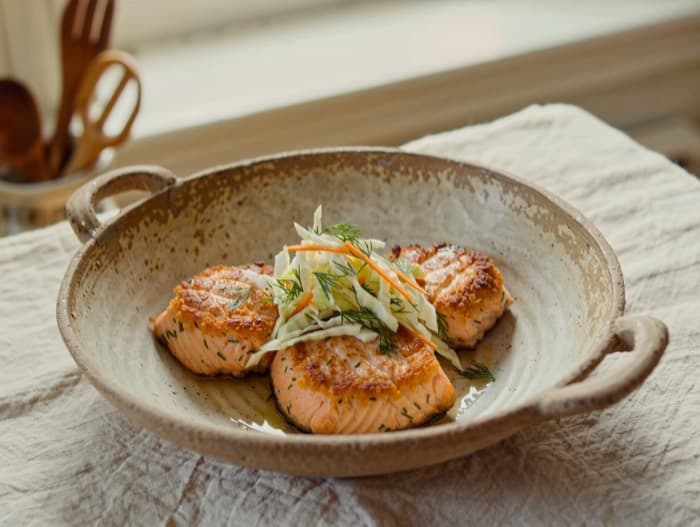
Salmon Patties with Dill Slaw
Budget salmon patties from a can, pan-fried crisp and served with a tangy slaw.
- Serves
- 4
- Total time
- 30 min
- Cost per serving (United States)
- $15.49
Ingredients
- 15 oz canned pink salmon
- 3/4 cup plain breadcrumbs
- 2 large eggs
- 1 yellow onions
- 4 tbsp mayonnaise
- 1 tbsp dijon mustard
- 1 lemon
- 3 tbsp vegetable oil
- 14 oz coleslaw mix (bagged)
- 1 tbsp apple cider vinegar
Method
Drain the salmon well and flake it into a bowl, removing any large bones.
Mix in the breadcrumbs, eggs, finely diced onion, 2 tbsp mayonnaise, the dijon, the juice of half the lemon and plenty of pepper.
Form 8 patties and chill them 10 minutes so they hold together.
Fry them in the oil over medium heat, 4 minutes a side, until deep golden.
Toss the coleslaw mix with the remaining mayonnaise, the vinegar and a pinch of salt.
Serve the patties with the slaw and the rest of the lemon in wedges.
What this costs, country by country
Each figure is the ingredients for the full recipe at prices read in that country’s own shops, in its own currency. Nothing here is converted from dollars.
| Country | Whole recipe | Per serving | Priced from |
|---|---|---|---|
| United Kingdom | £29.18 | £7.30 | 10 of 10 ingredients |
| Australia | $70.34 | $17.59 | 10 of 10 ingredients |
| New Zealand | $90.29 | $22.57 | 10 of 10 ingredients |
| Greece | 48,45 € | 12,11 € | 10 of 10 ingredients |
| Egypt | ٢٬١٢٤٫٢٠ ج.م. | ٥٣١٫٠٥ ج.م. | 10 of 10 ingredients |
| Spain | 39,82 € | 9,96 € | 10 of 10 ingredients |
| Mexico | $830.60 | $207.65 | 10 of 10 ingredients |
| Austria | € 60,02 | € 15,01 | 10 of 10 ingredients |
| United States | $61.96 | $15.49 | 9 of 10 ingredients |
| Canada | $74.56 | $18.64 | 9 of 10 ingredients |
| Germany | 24,55 € | 6,14 € | 9 of 10 ingredients |
Shopping somewhere we haven’t reached? See every price we hold and add what your shop charges.
The bigger number is usually the food that never gets cooked at all. Work out what your household throws away