Broiled Maple Dijon Salmon
Salmon fillets glazed with maple and mustard and broiled until the top caramelizes.
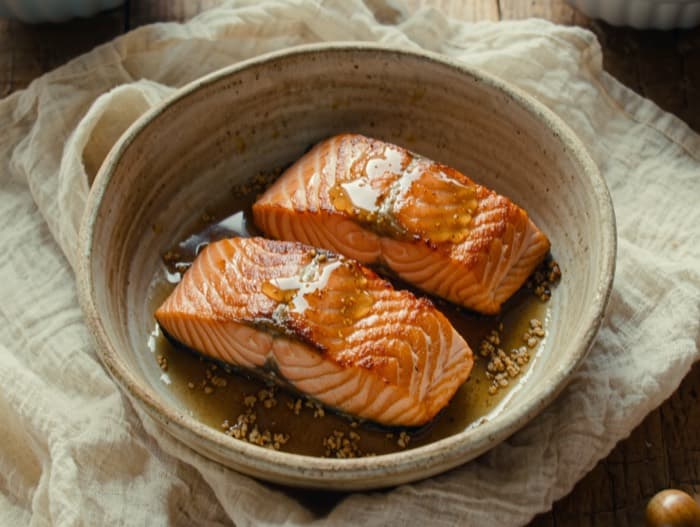
- Serves
- 4
- Total time
- 20 min
- Cost per serving (United States)
- $15.81
Ingredients
- 1 1/2 lb salmon fillet
- 3 tbsp pure maple syrup
- 2 tbsp dijon mustard
- 2 tbsp extra virgin olive oil
- 1 lemon
- 1 1/4 lb broccoli crowns
- 2 tsp kosher salt
- 3/4 tsp ground black pepper
Method
Heat the broiler with a rack 6 inches below and line a sheet pan with foil.
Cut the broccoli into florets, toss with the olive oil and half the salt, and spread on one side of the pan.
Pat the salmon dry, set it skin-side down on the other side, and season with the remaining salt and pepper.
Whisk the maple syrup and Dijon and brush thickly over the fillets.
Broil 9 to 11 minutes until the glaze bubbles and darkens and the salmon flakes at the thickest point.
Squeeze lemon over everything and serve straight from the pan.
What this costs, country by country
Each figure is the ingredients for the full recipe at prices read in that country’s own shops, in its own currency. Nothing here is converted from dollars.
| Country | Whole recipe | Per serving | Priced from |
|---|---|---|---|
| United Kingdom | £41.27 | £10.32 | 8 of 8 ingredients |
| Australia | $98.60 | $24.65 | 8 of 8 ingredients |
| New Zealand | $162.47 | $40.62 | 8 of 8 ingredients |
| Egypt | ٢٬٩٥٥٫٣٢ ج.م. | ٧٣٨٫٨٣ ج.م. | 8 of 8 ingredients |
| Canada | $146.99 | $36.75 | 8 of 8 ingredients |
| United States | $63.24 | $15.81 | 7 of 8 ingredients |
| Greece | 47,81 € | 11,95 € | 7 of 8 ingredients |
| Spain | 44,69 € | 11,17 € | 7 of 8 ingredients |
| Germany | 68,56 € | 17,14 € | 6 of 8 ingredients |
| Mexico | $2,892.23 | $723.06 | 6 of 8 ingredients |
| Austria | € 53,00 | € 13,25 | 6 of 8 ingredients |
Shopping somewhere we haven’t reached? See every price we hold and add what your shop charges.
The bigger number is usually the food that never gets cooked at all. Work out what your household throws away