Open-Face Tuna Melts
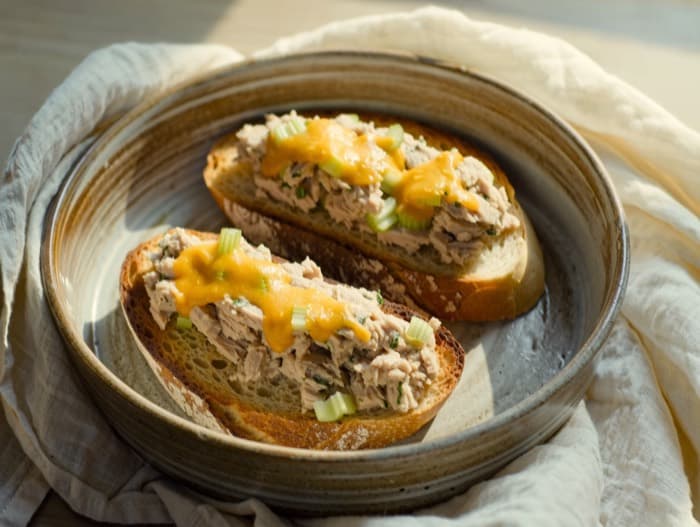
Sourdough loaded with celery-flecked tuna salad and broiled under bubbling cheddar.
- Serves
- 4
- Total time
- 20 min
- Cost per serving (United States)
- $10.56
Ingredients
- 20 oz canned chunk light tuna
- 1 sourdough loaf
- 8 oz shredded cheddar cheese
- 5 tbsp mayonnaise
- 1/4 bunch celery
- 1/2 red onion
- 1 tbsp dijon mustard
- 1 lemon
- 3/4 tsp ground black pepper
- 3 oz dill pickle spears(optional)
Method
Heat the broiler with a rack 6 inches below.
Drain the tuna well and flake it into a bowl.
Stir in the mayonnaise, Dijon, finely diced celery and red onion, lemon juice, black pepper, and chopped pickle.
Cut eight thick slices of sourdough and toast them lightly under the broiler on one side.
Flip, mound the tuna salad on the toasted side, and cover with cheddar.
Broil 3 to 4 minutes until the cheese is melted and blistered. Serve two slices per person.
What this costs, country by country
Each figure is the ingredients for the full recipe at prices read in that country’s own shops, in its own currency. Nothing here is converted from dollars.
| Country | Whole recipe | Per serving | Priced from |
|---|---|---|---|
| United States | $42.24 | $10.56 | 9 of 9 ingredients |
| United Kingdom | £23.88 | £5.97 | 9 of 9 ingredients |
| Australia | $50.10 | $12.53 | 9 of 9 ingredients |
| New Zealand | $77.21 | $19.30 | 9 of 9 ingredients |
| Canada | $83.25 | $20.81 | 9 of 9 ingredients |
| Spain | 24,82 € | 6,21 € | 9 of 9 ingredients |
| Mexico | $811.76 | $202.94 | 9 of 9 ingredients |
| Egypt | ١٬٠٤٠٫٧٧ ج.م. | ٢٦٠٫١٩ ج.م. | 8 of 9 ingredients |
| Greece | 29,78 € | 7,45 € | 7 of 9 ingredients |
| Austria | € 40,01 | € 10,00 | 7 of 9 ingredients |
| Germany | 21,08 €* | 5,27 € | 6 of 9 ingredients |
* We have read fewer than seven in ten of these ingredients in that country, so the total is a partial figure and the real one is higher.
Shopping somewhere we haven’t reached? See every price we hold and add what your shop charges.
The bigger number is usually the food that never gets cooked at all. Work out what your household throws away