Oven BBQ Drumsticks with Potato Wedges
Cheap drumsticks baked with a sticky barbecue glaze, with potato wedges on the same pan.
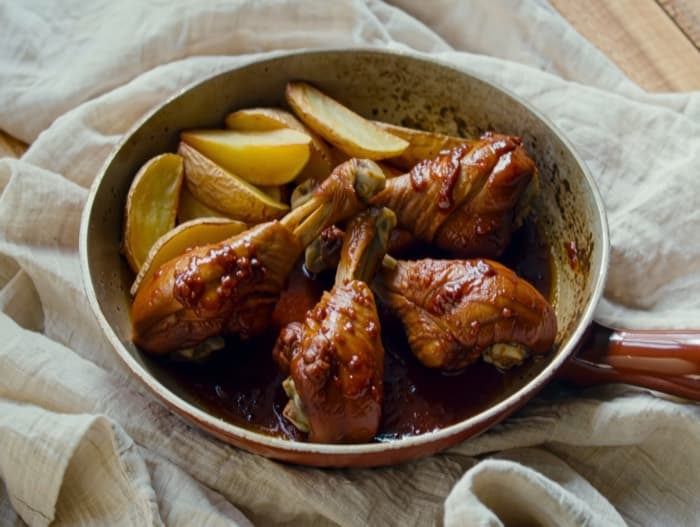
- Serves
- 4
- Total time
- 55 min
- Cost per serving (United States)
- $7.77
Ingredients
- 2 1/2 lb chicken drumsticks
- 1 1/2 lb russet potatoes
- 2 tbsp vegetable oil
- 8 tbsp barbecue sauce
- 2 tsp smoked paprika
- 1 1/2 tsp garlic powder
- 1 tsp onion powder
- 2 tsp kosher salt
Method
Heat the oven to 425F. Cut the potatoes into wedges.
Toss the drumsticks and wedges with the oil, paprika, garlic powder, onion powder and salt.
Spread on a large sheet pan without crowding and bake 30 minutes.
Brush the drumsticks with the barbecue sauce and turn the wedges.
Bake 12 to 15 minutes more, until the glaze is set and the drumsticks reach 175F.
Rest 5 minutes before serving.
What this costs, country by country
Each figure is the ingredients for the full recipe at prices read in that country’s own shops, in its own currency. Nothing here is converted from dollars.
| Country | Whole recipe | Per serving | Priced from |
|---|---|---|---|
| United Kingdom | £19.95 | £4.99 | 8 of 8 ingredients |
| Australia | $49.39 | $12.35 | 8 of 8 ingredients |
| New Zealand | $65.54 | $16.39 | 8 of 8 ingredients |
| Greece | 36,21 € | 9,05 € | 8 of 8 ingredients |
| Canada | $94.47 | $23.62 | 8 of 8 ingredients |
| United States | $31.07 | $7.77 | 6 of 8 ingredients |
| Egypt | ٩٢٦٫٠٧ ج.م. | ٢٣١٫٥٢ ج.م. | 6 of 8 ingredients |
| Spain | 15,96 € | 3,99 € | 6 of 8 ingredients |
| Mexico | $443.53* | $110.88 | 4 of 8 ingredients |
| Austria | € 12,37* | € 3,09 | 4 of 8 ingredients |
| Germany | 9,04 €* | 2,26 € | 2 of 8 ingredients |
* We have read fewer than seven in ten of these ingredients in that country, so the total is a partial figure and the real one is higher.
Shopping somewhere we haven’t reached? See every price we hold and add what your shop charges.
The bigger number is usually the food that never gets cooked at all. Work out what your household throws away